Medicare Part D: Is Your Current Plan Still the Right One?

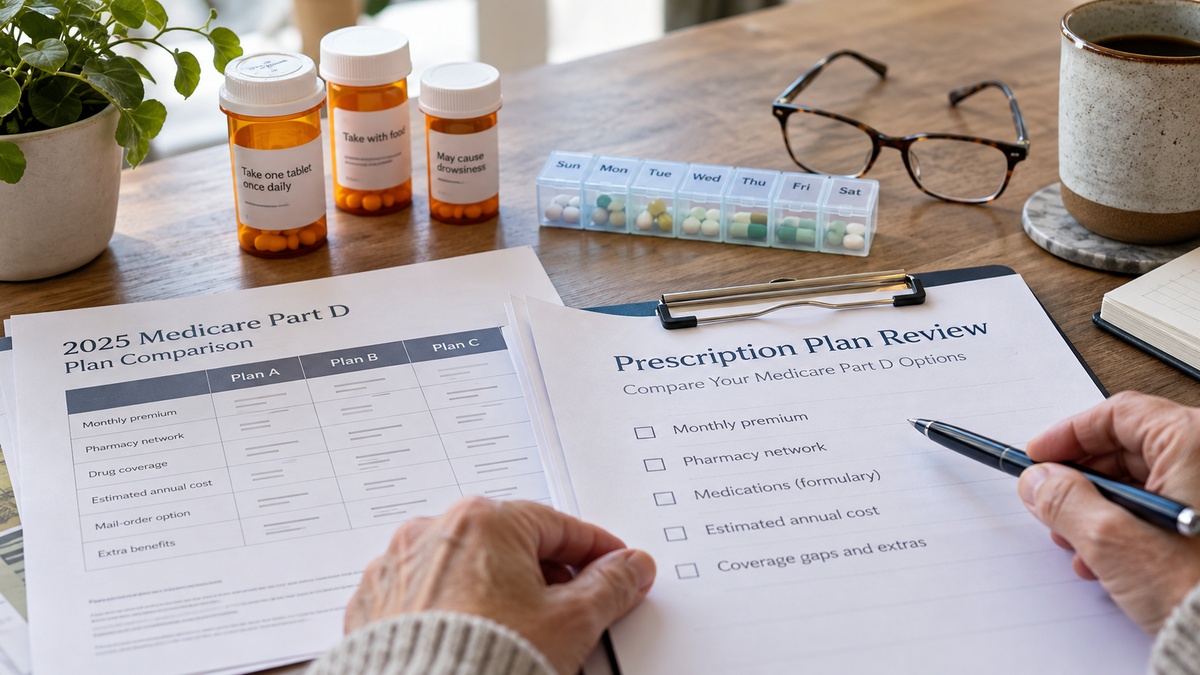
If you're enrolled in Medicare Part D prescription drug coverage, there's one mistake you should avoid: assuming the plan you have today will still be your best option next year.
With Medicare's annual open enrollment period underway, now is the time to take another look at your coverage.
Even if your medications haven't changed, your prescription drug plan may have.
Why Your Current Plan May No Longer Be the Best Fit
Medicare Part D plans can change from year to year, including:
- Monthly premiums and annual deductibles
- Which medications are covered
- What you pay for individual prescriptions
- Which pharmacies offer preferred pricing
These changes can have a meaningful impact on your annual healthcare expenses.
For example, a medication that was relatively inexpensive under your current plan could move to a different pricing tier next year. Or another plan might offer the same prescriptions at a lower total annual cost.
That's why comparing plans based solely on monthly premiums can be misleading. What matters is your total expected cost, including premiums, deductibles, and prescription expenses.
What's Changing for 2027?
One important feature of Medicare Part D is the annual limit on out-of-pocket spending for covered prescription drugs.
For 2027, that threshold increases to $2,400, up from $2,100 in 2026.
While this protection can help limit expenses for individuals with costly prescriptions, it doesn't necessarily mean every Part D plan will provide the same value.
Your specific medications, pharmacy preferences, and plan details still matter.
A Little Homework Could Make a Difference
Before renewing your coverage, it's important to review your current prescriptions and compare available plans.
This is something we do annually for our clients. We review their medications, compare available Part D plans, and evaluate the estimated total annual costs to help determine whether their current coverage remains the best fit.
Medicare's annual open enrollment period runs from October 15 through December 7, with changes taking effect January 1, 2027.
Sometimes the existing plan remains the best option. Other times, a change can result in meaningful savings.
Either way, the goal is simple: Make an informed decision rather than automatically renewing coverage that may no longer be the best fit.
Retirement Planning Is About More Than Investments
Healthcare costs are an important part of your overall retirement income strategy.
And just as your investments, taxes, and retirement income deserve periodic attention, so does your Medicare coverage.
The goal isn't simply to find the cheapest plan. It's to make sure you're getting the coverage you need without unnecessarily spending more than you should.
Sometimes, one of the simplest ways to improve your retirement plan is to revisit a decision you've already made.