Is Your Retirement Portfolio Taking More Risk Than You Realize?

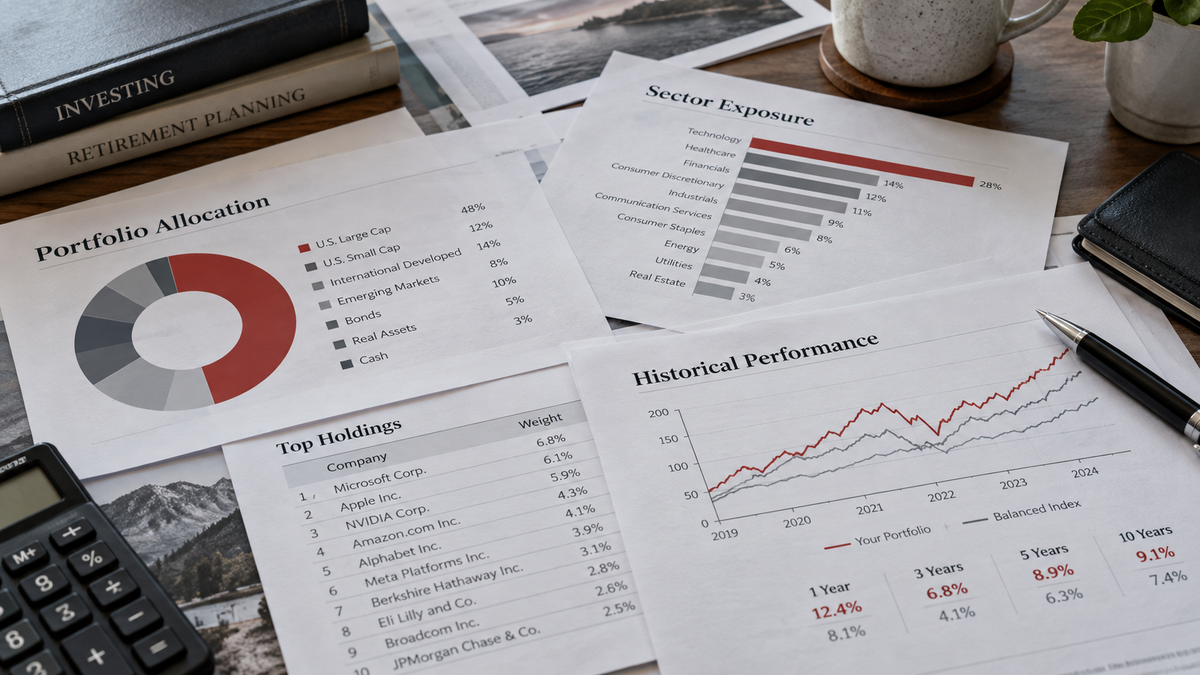
Most investors understand that diversification is important. That's why they own multiple mutual funds, ETFs, and investment accounts.
But here's a question worth considering: Are you truly diversified, or do you simply own a lot of investments?
There's a significant difference.
The Hidden Risk of Overlapping Investments
Imagine owning five different mutual funds. On the surface, that might seem like a well-diversified portfolio.
But what if all five funds own many of the same large companies?
Despite having multiple investments, your portfolio could be far more concentrated than you realize. If those companies experience a significant decline, several of your funds could fall together.
The number of investments you own doesn't necessarily tell you how much risk you're taking.
What Would a Market Decline Mean in Dollars?
Investors frequently discuss risk in percentages. But percentages don't always tell the whole story.
Consider someone with a $2 million investment portfolio. A hypothetical 25% decline would represent a $500,000 loss.
That's a very different conversation than simply discussing a 25% market correction.
Would that loss affect your retirement income? Would you need to adjust your lifestyle, postpone travel, or reconsider helping your children or grandchildren financially?
And perhaps most importantly, would you be comfortable remaining invested while waiting for a potential recovery?
Risk Should Match Your Retirement Goals
The objective isn't necessarily to eliminate investment risk. Taking some risk may be necessary to generate growth, keep pace with inflation, and support a retirement that could last 30 years or longer.
The key is making sure the amount of risk you're taking is appropriate for what you want your money to accomplish.
Money needed for retirement income over the next few years may have a very different purpose than money intended to grow for another 20 years or eventually pass to your heirs.
Your investment strategy should reflect those differences.
Know What You Own and Why
A well-designed retirement portfolio isn't simply a collection of investments. It's a coordinated strategy that considers your income needs, taxes, time horizon, and investment risk comfort zone.
Before the next market decline, ask yourself:
If my investments experienced a significant loss, would I still be able to Retire on My Terms?
Understanding that answer today can help you make more confident decisions tomorrow.